
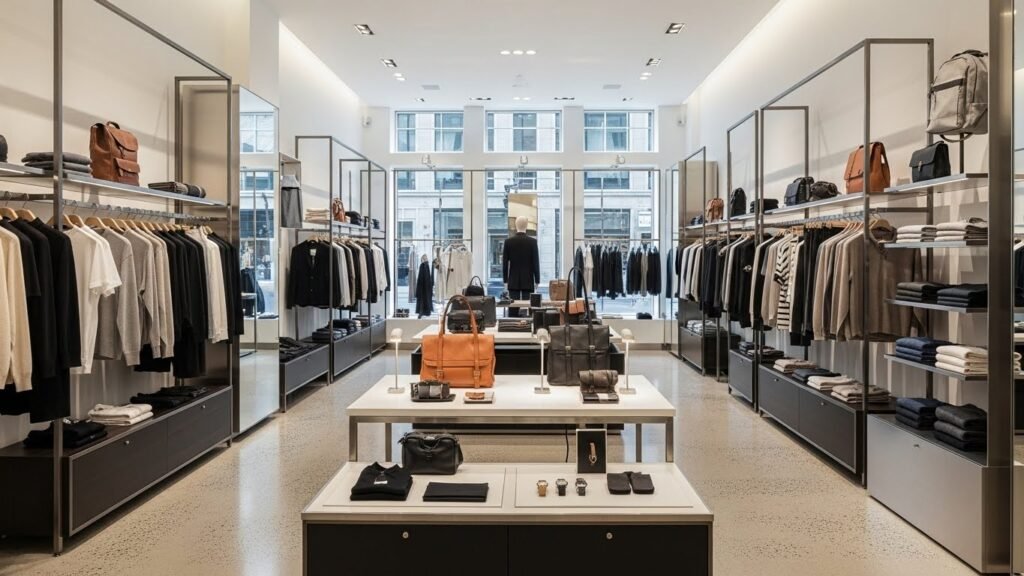
High shipping rates and strict carbon targets are hurting your retail projects. Ignoring how your fixtures break down leads to wasted space and high costs. Design for Disassembly solves both problems.
Design for Disassembly (DfD) allows fixtures to be shipped flat. This reduces container volume by up to 80%. This strategy cuts ocean freight costs significantly and lowers the carbon footprint per unit. It also simplifies repairs by allowing part-level replacement instead of discarding entire displays in the landfill.

I have managed many projects where we shipped fully assembled units only to see them arrive damaged. It was a nightmare for me and the client. Let me show you how DfD changes the game for your budget and the environment.
How does flat-pack optimization through DfD directly impact container utilization and ocean freight costs?
Shipping air across the ocean is a massive waste of your money. Bulky, pre-assembled displays fill containers quickly but leave them mostly empty of actual weight. This drives up your per-unit shipping cost.
DfD enables flat-pack optimization, which can save 50% to 80% of container space. By packing components tightly, you use fewer containers and less protective filler material. This directly lowers ocean freight expenses and reduces the fuel required for transport.

In my experience with Display Fixtures and Bespoke Shopfittings, shipping "knock-down" (KD) is the best way to protect your profit. When we ship fully assembled items, the boxes need thick foam and internal support to prevent shaking. This makes the box even bigger. With DfD, we pack the metal and wood parts flat against each other. This naturally protects the surfaces from bending or breaking. In China and Vietnam, factories like mine work on a 15% margin. Saving space is vital to keep our prices competitive. For example, a heavy checkout counter is very expensive to ship assembled. However, labor in the USA or Europe is very expensive too. The "optimal solution" I often suggest is a design that is easy to assemble. One worker should be able to put it together quickly without special tools. This balances low shipping costs with low local labor costs. We also use high-precision powder coating to ensure that parts fit together perfectly every time. This prevents expensive delays during the store setup.
Can modular "Universal Components" within a DfD framework simplify local repairs and extend the fixture's lifecycle?
Broken parts usually mean the whole display goes to the trash. This is bad for your brand image and the planet. Finding replacement parts for custom designs is often impossible after the project ends.
Modular universal components, such as standard posts and brackets, allow for easy local repairs. Since these parts are standardized, you can keep inventory locally. This extends the fixture's life and avoids the need to ship entirely new units for minor damage.

I always encourage designers like Mark to use "Universal Components" in their Bespoke Shopfittings. If we design the internal structure—like the uprights or shelf brackets—to be standard across different displays, we save time and money. My factory can keep these parts in stock or produce them very quickly. This reduces the time spent on new designs. If a shelf breaks in a store, the owner only needs to replace that one part. They do not have to wait for a custom piece to ship from China. This approach also helps with environmental goals. We use eco-friendly materials like certified wood or recycled plastics whenever possible. Even our powder coating is getting greener. We use natural gas or electricity and high-efficiency machines to reduce waste. We calculate the powder usage for every order to stay precise. By making fixtures easy to take apart, we ensure that at the end of their life, the metal and wood can be separated and recycled properly.
| Component Type | Repair Speed | Inventory Cost | Sustainability |
|---|---|---|---|
| Universal Post | Very Fast | Low | High |
| Custom Bracket | Slow | High | Low |
| Standard Shelf | Fast | Low | High |
What role do mechanical fastening techniques play in ensuring both structural integrity and end-of-life material recovery?
Glue and permanent welds make recycling nearly impossible. If you cannot separate materials, you cannot be truly sustainable. Poor fasteners also lead to wobbly displays that look cheap to your customers.
Mechanical fasteners, like high-quality bolts and cams, provide the strength needed for heavy-duty retail use while allowing for easy disassembly. These connectors ensure the fixture remains stable but can be separated into pure material streams at the end of its life.

Choosing the right fastening technique is where my technical team adds the most value. For small batches, we often use laser cutting for metal parts instead of expensive molds. This allows us to create precise slots for mechanical fasteners. Molds cost between $100 and $1000 and take 5 to 15 days. This is fine for 1,000 units but not for 50. For very complex parts, we now use 3D printing. We can print in steel, aluminum, or plastic in 12 to 36 hours. This is great for prototypes. In the production phase, we focus on precision. If a hole is off by one millimeter, the assembly fails. We communicate deeply with clients about how they will use the product. We ensure that our fasteners meet local standards, like E0 or P2 for wood and electrical certifications. This prevents the quality gap that many foreign buyers fear. When a brand moves to 1,000 units, these mechanical designs allow for fast, standardized production that maintains a high-quality look across all stores.
| Fastening Method | Reusability | Strength | Recycling Ease |
|---|---|---|---|
| Welding | None | Extreme | Low |
| Glue | None | Medium | Very Low |
| Bolts/Cams | High | High | Very High |
Conclusion
Design for Disassembly is a smart strategy. It saves you 50-80% on shipping, reduces waste through modular repairs, and makes your retail fixtures easier to recycle and more sustainable.


