
What specific production processes and eco-friendly materials are being implemented to reduce the carbon footprint of Display Fixtures and Bespoke Shopfittings manufacturing?
Traditional Display Fixtures and Bespoke Shopfittings manufacturing creates massive waste and high energy costs. If you ignore these environmental impacts, your brand will face higher taxes and lose customers who care about the planet.
Factories reduce carbon footprints by using modular Design for Disassembly (DfD), switching to powder coating over liquid paint, and utilizing recycled or bio-based materials. These processes lower energy use, minimize hazardous waste, and improve shipping efficiency through smaller packaging volumes.

I have spent many years managing Display Fixtures and Bespoke Shopfittings factories in China. I have seen how much waste a single mistake can create. To survive today, a factory must be green and efficient. If you read further, I will show you how we balance eco-friendly choices with the reality of tight profit margins.
How can "Design for Disassembly" (DfD) be integrated into the production process to facilitate circularity?
Most old displays are glued or welded into one solid piece. When a store closes, these displays go straight to the landfill because they are too big to move or recycle.
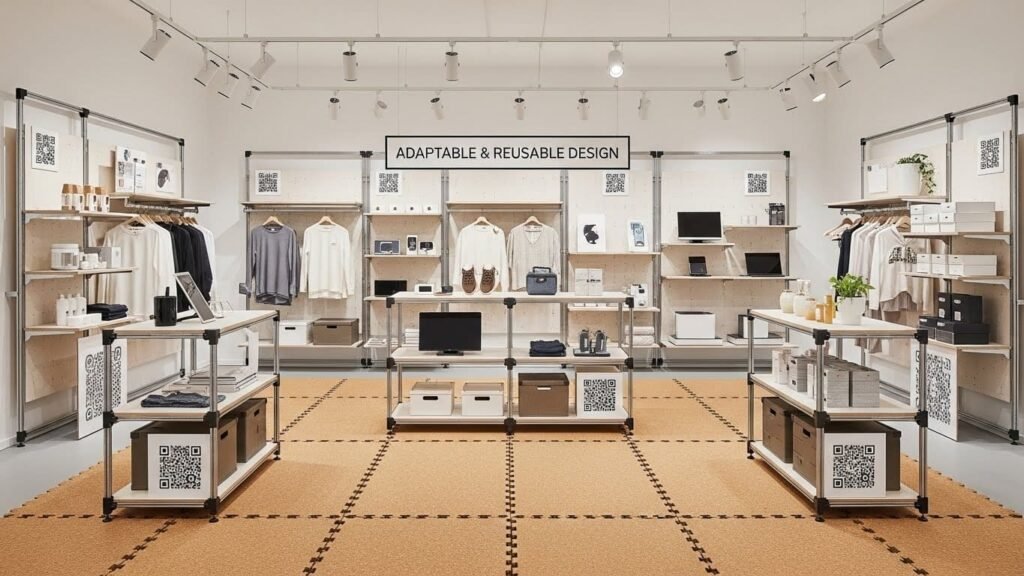
Design for Disassembly uses mechanical fasteners and modular parts instead of permanent glue. This allows workers to take the fixture apart quickly for recycling, repair, or moving to a new store location.

In my factory, we focus on "knock-down" structures. This means we design the display to be shipped in flat boxes. This is a huge win for the environment because we can fit more units in one container. It reduces the carbon footprint of shipping significantly. Also, I try to use universal components like standard uprights and shelves. If a brand changes its look, they do not need to throw everything away. They can keep the internal metal structure and just change the outer panels. This saves the client money and reduces raw material waste. My team spends a lot of time in the design phase to make sure these parts fit perfectly. In Asia, our profit margins are often around 15%. We cannot afford mistakes or rework. If a part does not fit during assembly at the store, we lose all our profit. High precision in the factory is the only way to make DfD work.
| DfD Feature | Benefit to Environment | Benefit to Factory/Client |
|---|---|---|
| Modular Joints | Easy to replace broken parts | Lower maintenance costs |
| Flat-pack Design | Fewer shipping trips needed | Lower logistics and storage fees |
| Universal Parts | Less raw material extraction | Faster production lead times |
| Screw-fixings | Easier material separation | Better recycling rates |
What are the trade-offs between using Bio-based Resins versus Recycled Post-Consumer Plastics in fixture components?
Brands want to use green materials, but they often worry about the cost. Choosing between bio-based resins and recycled plastics is a common challenge I help my clients solve every day.
Bio-based resins come from renewable plants but can be more expensive to produce. Recycled plastics reduce waste in the ocean and landfills but can have inconsistent colors or lower structural strength if not handled correctly.

When I work with custom designs, I look at the supply chain. For large orders, we use recycled plastics because they are more available in high volumes. However, recycled materials can be tricky. Sometimes the color is not 100% perfect. My technical team has to adjust the machine settings to make sure the plastic is still strong enough for heavy-duty use. Bio-based resins are great for high-end brands that want a "clean" story. But these materials often require special molds. As I always say, we only open molds if the order volume justifies the cost. For small batches, we might use laser cutting for wood or metal instead of plastic to stay eco-friendly without high tooling costs. My factory works with a strong network of suppliers who provide these sustainable materials on time. If a supplier is late, I have even paid for air freight myself to keep the project on schedule. That is the only way to maintain long-term trust.
| Material Type | Carbon Footprint | Cost Factor | Aesthetic Quality |
|---|---|---|---|
| Bio-based Resin | Very Low | High | Excellent/Consistent |
| Recycled Plastic | Low | Medium | Variable/Industrial |
| Sustainable Wood | Medium | Medium | Premium/Natural |
| Recycled Steel | Low | Low-Medium | High (with coating) |
To what extent can Powder Coating technologies and "Closed-Loop" water systems reduce hazardous waste and energy consumption compared to traditional liquid painting?
Liquid painting is a dirty process that releases harmful gases into the air. It also creates a lot of chemical water waste that is very difficult and expensive to clean.
Powder coating uses electricity to stick dry powder to metal parts, which eliminates liquid waste. Advanced "Closed-Loop" systems recycle the water used for cleaning the metal, so nothing toxic enters the local environment.

In my factory, we switched to powder coating powered by natural gas and electricity. This is much cleaner than old oil-based systems. We calculate the powder usage for every order very precisely. Our machines are so accurate that we keep the coating thickness exactly where the designer wants it. This is important because many fixtures have parts that must slide together. If the paint is too thick, the parts will not fit. If it is too thin, the metal will rust. By controlling the thickness, we avoid rework. Rework is the biggest cause of waste and lost profit in our industry. Most factories in China and Vietnam are now under strict government rules for environmental safety. I make sure our "Closed-Loop" system filters every drop of water we use. We do this not just for the law, but because high-precision production is better for business. It makes the final product look better and last longer in a busy store.
| Technology | Waste Reduction | Energy Efficiency | Durability |
|---|---|---|---|
| Powder Coating | 95% (Overspray is reused) | High (Fast curing) | Very High |
| Liquid Painting | 20% (Much is lost to air) | Low (Long drying) | Moderate |
| Closed-Loop Water | 100% (Water is filtered) | Medium | N/A |
| Laser Cutting | High (Less scrap metal) | High | N/A |
Conclusion
Reducing carbon footprints requires a mix of modular design, sustainable materials, and clean coating. These steps save costs, protect the environment, and ensure high-quality displays for global retail brands.


